
Pakistan, UN-Habitat begin national urban strategy process for building climate-resilient cities
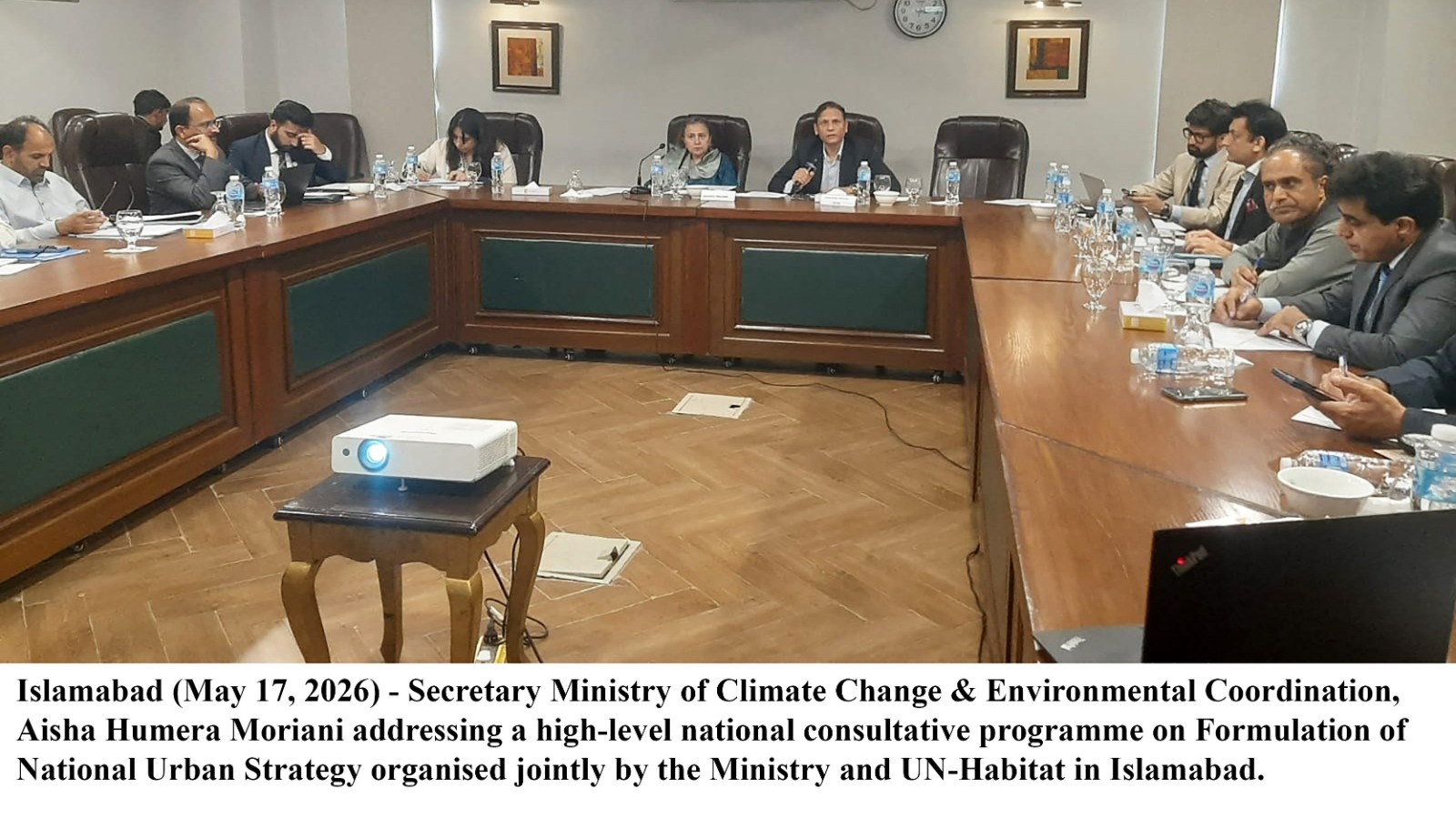
Pakistan, UN-Habitat begin national urban strategy process for building climate-resilient cities ISLAMABAD (May 14, 2026) - Warning that Pakistan’s cities are rapidly turning into “epicentres of climate vulnerability”, the federal government has initiated consultations on the country’s first-ever National Urban Strategy aimed at protecting urban centres from floods, heatwaves, water shortages and unregulated construction. The consultative process was launched during a high-level national workshop jointly organised by the Ministry of Climate Change and Environmental Coordination and UN-Habitat Pakistan amid growing concern over recurring climate disasters from the Swat floods and Karachi’s annual urban inundations to fatal rain incidents in Islamabad’s upscale housing societies. Federal and top key provincial officials, disaster management authorities, urban planners, development experts and international organisations attended the session to help shape what officials called a “climate-resilient roadmap” for Pakistan’s rapidly expanding cities. Presiding over the event, Climate Change Secretary Aisha Humera Moriani warned that Pakistan’s urban growth was outpacing its ability to withstand climate shocks. Ms Moriani noted that more than 36 per cent of Pakistan’s population already lived in urban areas and projected that over half the country would reside in cities within two decades. Referring to recurring floods in Rawalpindi’s Nullah Lai and Nowshera, she said encroachments, poor waste management and outdated drainage systems had dangerously increased urban flooding risks. “The hard truth is that no national framework currently exists to systematically address these interconnected challenges,” she observed. The climate secretary said the proposed National Urban Strategy would align with Pakistan’s National Climate Change Policy 2021, National Adaptation Plan 2023 and commitments under the Paris climate agreement. Senior Joint Secretary Muhammad Ijaz Ghani linked recent climate disasters directly to poor urban governance and unchecked construction. Recalling the Swat River floods, he said hotels and guesthouses had been built on natural floodplains without zoning safeguards or resilient infrastructure. “The Swat tragedy was not just a natural disaster. It was an act of unplanned, illegal and spatially blind construction,” he remarked. Referring to repeated flooding in Islamabad’s Sector E-11 and the recent DHA underpass drowning incident, he said even modern housing schemes were failing to account for climate realities. “The DHA incident was a wake-up call. No architectural grandeur can compensate for the absence of climate-resilient drainage systems and proper hydraulic planning,” he said. Mr Ghani warned that Karachi’s drainage infrastructure had become incapable of coping with even moderate rainfall, resulting in repeated deaths from drowning, electrocution and collapsing buildings during monsoon seasons. “These are not isolated misfortunes. They are symptoms of a systemic failure to plan our cities and protect natural drainage systems,” he added. Officials said the forthcoming strategy would introduce riverine zoning rules, climate-sensitive spatial planning and stronger building regulations. UN-Habitat Pakistan climate expert Khalil Ahmed warned that Pakistan’s urban areas were increasingly vulnerable to climate-induced floods, droughts, heatwaves and infrastructure failures due to rapid urbanisation, weak drainage systems and poor enforcement of environmental regulations. He said Pakistan’s climate risk profile was shifting from isolated disasters to “compound, cascading and systemic climate crises”, placing enormous pressure on urban infrastructure, water resources and public health systems. “Pakistan’s urban population is expected to exceed 50 per cent within the next two decades, while flooding, heatwaves and water scarcity are increasing in both frequency and intensity,” he observed. Khalil Ahmed said fragmented coordination among climate, housing, environment and local government institutions had constrained the country’s ability to respond effectively to urban climate threats. He described the workshop as the “first foundational step” towards developing a nationally coordinated and climate-resilient urban framework capable of reducing the impacts of urban flooding and other climate-related disasters. According to him, the consultation aimed to identify priority urban risks and policy gaps, integrate climate resilience into planning frameworks, promote Green Building Codes and strengthen environmental assessment mechanisms. “The goal is to move from fragmented responses to a coordinated national framework with clear institutional responsibilities and practical implementation tools,” he said. Deputy Director Media and Communications at the climate ministry Muhammad Saleem Shaikh stressed the importance of public awareness and climate advocacy in making the proposed strategy effective on the ground. “Climate-resilient cities cannot be built through policies alone. Public awareness, community engagement and sustained climate advocacy must become central pillars of Pakistan’s urban planning framework,” he said. Urban Affairs Director Muhammad Azim Khoso called for urgent implementation of Pakistan Green Building Codes 2023, saying the country needed climate-resilient and environmentally sustainable infrastructure. “Buildings of the future must conserve energy, save water and minimise environmental damage from construction to demolition,” he stressed. Earlier speakers warned that Pakistan’s infrastructure, healthcare, energy and water systems were increasingly coming under pressure from recurring climate shocks and extreme weather events, causing mounting economic losses and public health risks.
“Our cities are becoming urban heat islands, flood traps and water-stressed zones because climate risks were never integrated into the way we planned and governed them,” she said.
‘Cities facing cascading climate crises’