
Pakistan ramps up efforts to strengthen framework for safe chemicals management
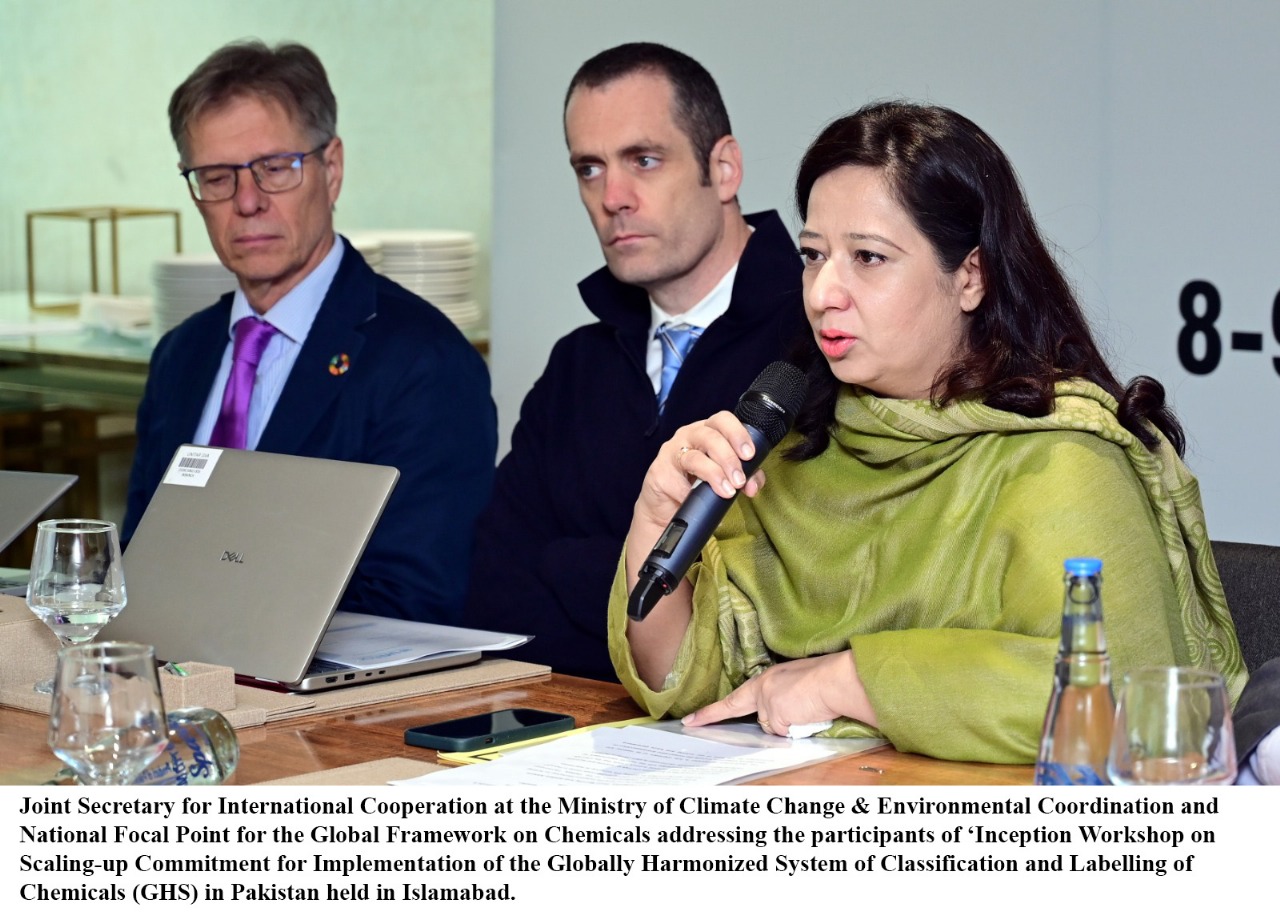
ISLAMABAD (Dec 10, 2025) - Pakistan is stepping up efforts to strengthen the safe management of chemicals, improve national chemicals governance and promote safer handling of hazardous substances, Joint Secretary (International Cooperation) at the Ministry of Climate Change and Environmental Coordination Nazia Zaib Ali said on Wednesday. Speaking at the inaugural session of a capacity-building inception workshop on Scaling Up the Implementation of the Globally Harmonized System of Classification and Labelling of Chemicals (GHS), Ms Ali, who also serves as the National Focal Point for the Global Framework on Chemicals, highlighted that the government remained committed to meeting its national and international environmental obligations, including those under the Basel, Rotterdam, Stockholm, Minamata, Vienna and Montreal conventions. The Basel, Rotterdam, Stockholm, Minamata, Vienna and Montreal conventions collectively aim to protect human health and the environment from hazardous chemicals and pollutants through international cooperation and regulation, she explained. The senior ministry official Nazia Zaib Ali also said that the GHS is an internationally recognised system that classifies chemical hazards and communicates them through standardised labels, pictograms and safety data sheets. Adopted globally, it ensures that workers, consumers and communities receive clear and consistent information about risks associated with chemicals, she added. Ms Ali outlined key national steps already taken, including the National Hazardous Waste Management Policy (2022) and its implementation plan, alongside upcoming measures such as a National Chemicals Management Policy, a Chemicals Control Act and the establishment of a specialised directorate for hazardous chemicals and waste. “These efforts reflect Pakistan’s determination to protect human health and the environment from the adverse impacts of chemicals for current and future generations,” she said. The workshop, organised by the United Nations Institute for Training and Research (UNITAR) in collaboration with UN agencies and the Ministry of Climate Change and Environmental Coordination, aims to review existing GHS-related legislation, introduce technical elements of the system, assess needs across agriculture, workplaces and consumer products, and begin developing a national roadmap specifying roles, milestones and capacity-building requirements. “GHS is the basis for the safe use of chemicals. Through product labels and safety data sheets, the communication of hazards helps to ensure chemicals can be used safely and safeguards people’s health and the environment,” said Oliver Wootton, Senior Programme Specialist at UNITAR. Officials noted that the initiative will also enhance chemicals management across supply chains, improve workplace safety, support compliance with international standards and contribute to Pakistan’s sustainable development goals. The climate change ministry expressed appreciation for UNITAR’s continued partnership and thanked stakeholders for their commitment to advancing a safer and more coherent chemicals-management system in the country. In his remarks, Environmental and climate change policy advocacy expert and media spokesperson for the Ministry of Climate Change and Environmental Coordination Mohammad Saleem Shaikh said that raising public and institutional awareness was critical for the effective implementation of the Globally Harmonized System (GHS) and other international chemicals conventions. He noted that informed workers, farmers, industrial operators and regulators were essential for reducing chemical-related risks. “Stronger awareness, clearer labelling and better compliance with global safety standards are central to preventing accidents and protecting communities from hazardous substances,” Mr. Shaikh said. He emphasised that the Basel, Rotterdam, Stockholm, Minamata, Vienna and Montreal conventions provided Pakistan with globally recognised frameworks to modernise chemical governance and reduce environmental and public-health impacts. “Enhanced outreach, risk communication and nationwide capacity-building are vital for improving chemical safety in workplaces, agriculture and consumer markets. Without effective advocacy and public literacy on chemical hazards will remain a challenge to Pakistan’s successful efforts being taken for strengthening compliance, preventing pollution and safeguarding vulnerable communities,” environmental and climate change policy advocacy expert Mohammad Saleem Shaikh cautioned.