
ECO nations adopt Islamabad Declaration to boost disaster resilience
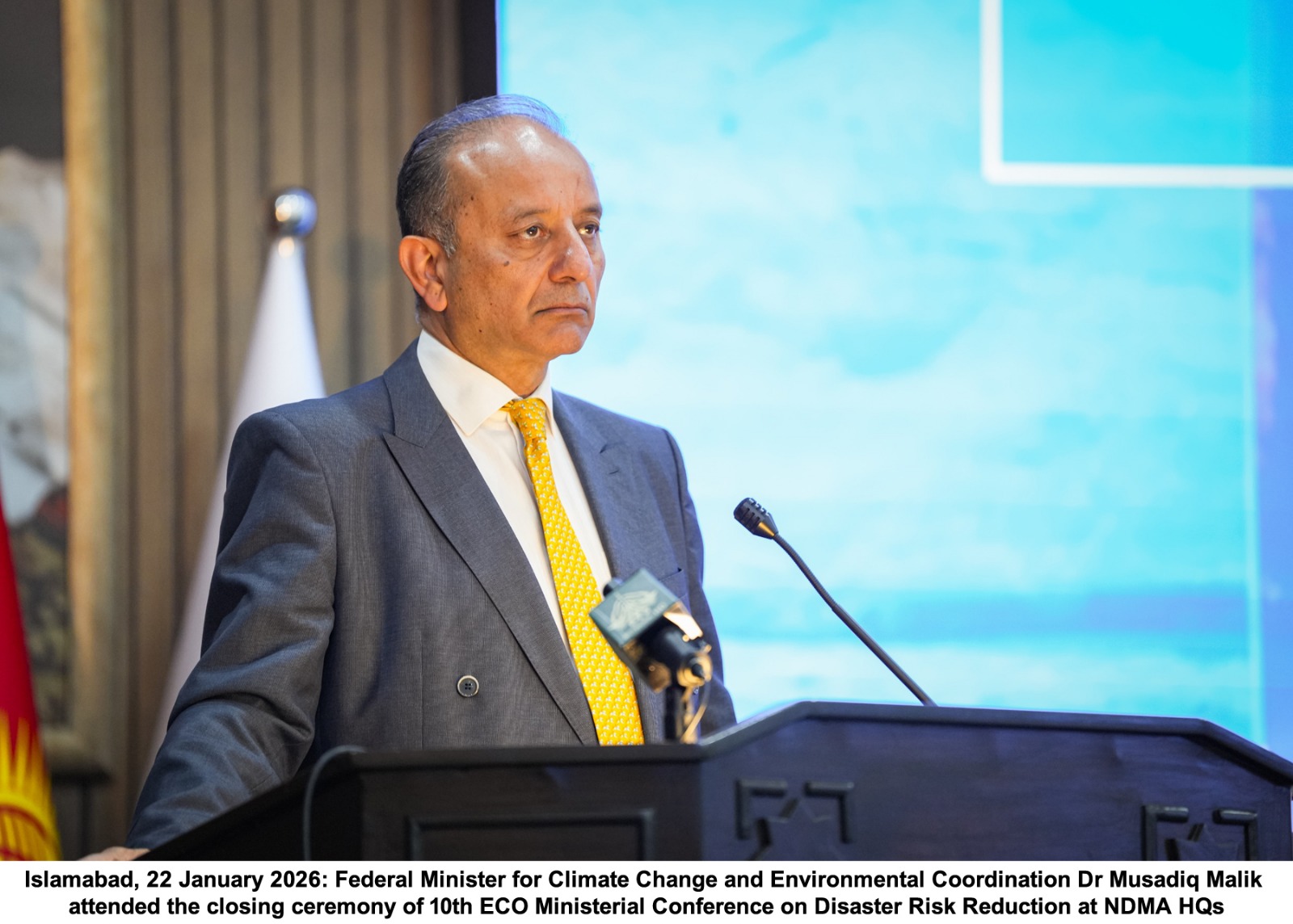
ISLAMABAD (January 22, 2026) - Climate-induced disasters are no longer distant threats but an everyday reality, Federal Minister for Climate Change and Environmental Coordination Dr Musadik Malik said, urging regional countries to act collectively through inclusive, science-based and people-centred strategies. Addressing the closing session of the 10th Ministerial Meeting of the Economic Cooperation Organisation on Disaster Risk Reduction (DRR), the minister said Pakistan was committed to leading by example by strengthening regional solidarity and placing vulnerable communities at the heart of disaster preparedness and response. His remarks came as ministers and senior officials from Economic Cooperation Organization member states adopted the Islamabad Declaration, reaffirming their shared resolve to enhance regional cooperation, disaster resilience and coordinated action in the face of escalating climate risks. The two-day meeting, held on Jan 21–22 and hosted by National Disaster Management Authority (NDMA), reviewed progress since the last ministerial conference and endorsed a set of measures aligned with the Sendai Framework, ECO Vision 2025 and the Izmir Treaty. The sessions were chaired by NDMA Chairman Lt Gen Inam Haider Malik. Delegates from Azerbaijan, Kyrgyzstan, Tajikistan, Türkiye, Uzbekistan, Turkmenistan and Iran underlined the growing complexity of climate-driven hazards and stressed the need for stronger regional coordination, harmonised frameworks and investment in early warning systems, joint training and capacity building. A key outcome was the endorsement of Pakistan’s offer to make its National Emergencies Operation Center (NEOC) available as a regional hub for disaster risk reduction planning, joint assessments, multilateral simulation exercises and real-time information sharing. Member states agreed to consider NEOC-based models as scalable frameworks for similar facilities across the ECO region, with technical support from Pakistan. The meeting also backed a range of regional initiatives, including the development of a land hazard zonation map, improved risk communication, enhanced joint search-and-rescue capacities, coordinated logistics and relief operations, and real-time seismic data sharing. Türkiye’s proposal to establish a Regional Seismic Data Centre was warmly welcomed. Cooperation with international partners was another focus, with delegates endorsing closer engagement with UNESCAP, APDIM and UNICEF. A new two-year work plan between the ECO Secretariat and UNICEF Tajikistan was approved, alongside the launch of a joint short animated video aimed at educating children across the region on disaster prevention and preparedness. In his closing remarks, Lt Gen Inam Haider Malik said the declaration represented a collective resolve to safeguard communities across the ECO region against mounting disaster risks. He reiterated Pakistan’s readiness to share expertise and technological capabilities to strengthen regional preparedness. Delegates thanked the government of Pakistan and the NDMA for their hospitality and organisational arrangements, and commended the ECO Secretariat for steering the process. The date and venue of the 11th ECO ministerial meeting will be finalised in consultation with the secretariat.
Through the Islamabad Declaration, member states reaffirmed their commitment to inclusive disaster risk reduction, emphasising the empowerment of women, youth, older persons and persons with disabilities, as well as whole-of-government and whole-of-society approaches to resilience building. The declaration also called for stronger follow-up mechanisms through the ECO Secretariat to ensure effective implementation of agreed actions.